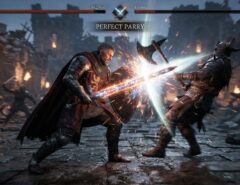
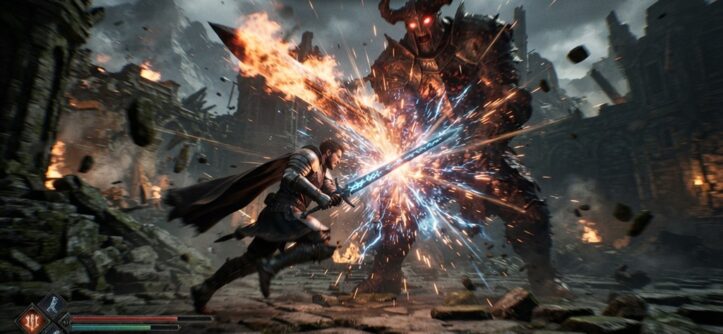
Mastering action game combat comes down to three things: sharp reaction timing, disciplined positioning, and pattern recognition built through focused repetition. Pro players aren’t reacting faster because of superhuman reflexes they’re reacting faster because they’ve already seen the pattern a hundred times before. The gap between an average player and a pro is rarely raw skill; it’s preparation.
This guide breaks down exactly how competitive and high-level players approach combat systems, from the mental habits they build to the specific practice routines that turn “button mashing” into precise, readable decision-making. Whether you’re playing a hack-and-slash, a souls-like, a fighting game, or a fast-paced shooter, the underlying principles carry over.
By the end of this article, you’ll have a practical framework you can apply in your next session not just abstract advice, but concrete habits worth building.
Understand Your Character’s Moveset Before You Fight

You can’t master combat with a toolkit you don’t fully understand. Before jumping into difficult encounters, pro players spend time in practice modes, tutorials, or low-stakes fights learning exactly what every move does, including its startup time, range, and recovery window.
Learn Frame Data and Move Timing
Frame data tells you how many frames (fractions of a second) an attack takes to start, how long it’s active, and how long you’re vulnerable afterward. Many competitive games display this information in training modes, and even if yours doesn’t, you can approximate it by counting how long it takes to punish a whiffed attack.
Here is a refined, premium version that naturally weaves your anchor text into a single, high-impact paragraph under an engaging H3:
Capitalize on Every Mistake: Automated Punishes and Co-Op Reflexes
Every move that leaves an opponent exposed demands a swift, memorized response. Industry pros never improvise combos in the heat of battle; instead, they drill muscle memory until execution becomes effortless, freeing up critical mental bandwidth to anticipate their rival’s next move rather than hesitating over button sequences. Mastering frame-perfect dodges and combo chains requires dedicated practice, especially when sharpening your skills in real-time competition. If you want to put your combat reflexes to the ultimate test alongside a friend during a quick study or work break, play 2 player action games unblocked on Chromebook to launch straight into high-stakes local co-op battles.
Master Positioning and Spacing
Positioning is often more important than raw mechanical skill, because good spacing lets you dictate when fights happen instead of reacting to them. If you’re always in your opponent’s optimal attack range, you’re playing on their terms.
Good spacing means staying just outside an enemy’s effective range while remaining close enough to punish their mistakes. This applies whether you’re dodging a boss’s sword swing or juking a player in a shooter distance management determines who gets to act first.
Use the Environment to Your Advantage
Walls, ledges, chokepoints, and elevation changes all change the math of a fight. Experienced players actively steer engagements toward terrain that limits an opponent’s options, such as cornering them against a wall where their dodge roll has less room to work.
Avoid Over-Committing to Aggression
New players tend to associate skill with constant offense, but overextending leaves you vulnerable to punishes. According to industry experts and competitive coaches, controlled aggression attacking in calculated windows rather than nonstop consistently outperforms relentless button pressure at higher skill levels.
Train Reaction Time and Pattern Recognition
Reaction speed matters, but pattern recognition matters more, because recognizing a pattern lets you respond before the animation even finishes. Pros aren’t reacting to the attack itself as often as you’d think they’re reacting to the tell that precedes it.
Study Enemy or Opponent Tells
Every boss, AI enemy, or human opponent has visual or audio cues that hint at their next move: a wind-up animation, a sound effect, a shift in stance. Watching replays (your own or professional players’) to identify these tells is one of the fastest ways to close the skill gap, because it turns unpredictable fights into readable ones.
Practice With Intentional Drills, Not Just Matches
Grinding matches alone doesn’t build precision the way targeted drills do. Setting up specific scenarios like practicing a dodge-punish sequence 50 times in a row trains muscle memory far more efficiently than hoping the situation comes up naturally in a real match.
Build a Consistent Practice Routine
Improvement in action game combat is a byproduct of structured practice, not just playtime. A player who spends 30 focused minutes drilling combos will often improve faster than one who plays two unfocused hours.
A useful structure many competitive players follow looks like this:
- Warm-up (10 minutes): Execute your core combos and movement tech to get your inputs consistent before facing real opponents.
- Skill-focused practice (20-30 minutes): Isolate one weakness punishing, blocking, spacing and drill it deliberately.
- Applied matches (remaining time): Take what you drilled into real fights and consciously look for chances to use it.
Review Your Own Replays
This is the step most players skip, and it’s arguably the highest-value habit on this list. Watching your own matches back even just the losses reveals patterns you’re blind to in the moment, like consistently whiffing at a certain range or panicking under pressure. Pro players and coaches treat replay review as non-negotiable, not optional.
Manage Your Mindset Under Pressure

Combat mastery isn’t purely mechanical how you handle tilt, panic, and fatigue directly affects your execution. A player with slightly worse mechanics but a calmer mindset will often beat a mechanically superior player who tilts easily.
One angle rarely discussed in typical guides: treat losing streaks as data corruption, not personal failure. When you’re on tilt, your inputs become less precise and your decision-making shifts toward panic-based reactions rather than read-based ones meaning the games you lose while tilted are teaching you bad habits, not good lessons. Recognizing this in the moment and simply stepping away for a few minutes is a mechanical skill in its own right, not just a soft-skills tip.
Set Realistic Session Goals
Instead of grinding for hours hoping to “get better,” set a specific, measurable goal per session like “land this punish combo cleanly 10 times” so you always walk away having actually practiced something instead of just playing.
Study High-Level Players and Apply What You See
Watching professional or highly ranked players play is one of the fastest ways to internalize decision-making patterns that would otherwise take dozens of hours to discover on your own. The goal isn’t to copy their exact inputs it’s to understand the reasoning behind their choices.
Pay attention to when high-level players choose to disengage rather than press an advantage, how they bait out reactions, and how they adjust their approach mid-fight based on what the opponent is doing. These decision-making patterns transfer across most action games, even if the specific mechanics differ.
Frequently Asked Questions
How long does it take to get good at action game combat?
It depends heavily on the game’s complexity and how deliberately you practice, but most players see noticeable improvement within a few weeks of focused, drill-based practice rather than casual play. Consistency matters more than total hours logged.
Do I need fast reflexes to master combat in action games?
Not as much as people assume pattern recognition and positioning consistently outperform raw reflexes at most skill levels. Many top players succeed by reading situations early rather than reacting fast to what’s already happening.
Should I use a controller or keyboard and mouse for better combat performance?
Whichever input method lets you execute your intended moves most consistently is the right choice, since both have produced high-level players. The best input device is the one you’ve trained enough on to make execution feel automatic.
Why do I keep losing to the same enemy or opponent?
Repeated losses to the same encounter usually mean there’s a specific tell or pattern you haven’t identified yet, not a general skill gap. Reviewing a replay of that specific fight will almost always reveal the moment things went wrong.
Is watching pro players actually useful, or should I just practice more?
Both are useful, but they serve different purposes watching builds strategic understanding while practicing builds execution. Ideally, you alternate between the two rather than relying on only one.
Final Thoughts
Mastering action game combat isn’t about grinding endless hours or having faster reflexes than everyone else it’s about understanding your tools, controlling space, recognizing patterns, and practicing with intention. Build a structured routine, review your own mistakes honestly, and study how top players make decisions rather than just what buttons they press. Do that consistently, and the gap between “decent” and “pro-level” closes faster than most players expect.