
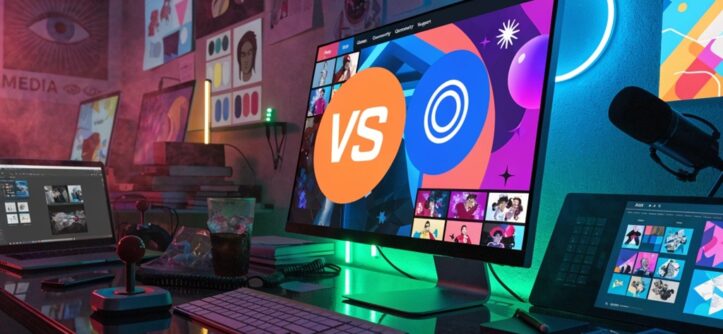
Branding a fighting games online free portal means giving your site a clear identity — a memorable name, a distinct visual style, and a content strategy — that makes gamers choose your platform over dozens of similar ones. It’s not just a logo; it’s the entire experience a player associates with your brand the moment they land on your homepage. Done right, strong branding turns a random collection of Flash-era or HTML5 fighting games into a destination players bookmark and return to.
The free online games space is crowded. Search “fighting games online free” and you’ll find hundreds of portals offering nearly identical libraries of Street Fighter clones, stick-figure brawlers, and browser-based tournament games. What separates the portals that build a loyal audience from the ones that disappear after six months usually isn’t the game selection — it’s the branding.
This guide walks through the practical steps of building a recognizable, trustworthy brand for a fighting games portal, from naming and visual identity to community building and monetization, with a few insights most “how to start a gaming website” articles skip entirely.
Choose a Name That Signals “Fighting Games” Instantly
Your portal’s name should tell a visitor what kind of games they’ll find within two seconds of reading it. Vague names like “PlayZone” or “GameHub” don’t communicate niche focus, and in a crowded market, ambiguity costs you clicks.
What Makes a Fighting Games Portal Name Work
Names that perform well in this niche typically combine an action word (clash, brawl, strike, combo, arena) with a gaming term (games, zone, hub, portal). Think in terms of how the name reads in search results and social shares — short, punchy names are easier to remember and easier to type into a browser bar directly, which matters for repeat traffic.
Building Brand Authority with Niche Content
Skip generic buzzwords like “ultimate” or “free” that dilute brand recall, and instead integrate authentic FGC terminology—like combo, KO, or frame data—directly into your brand identity and content strategy. Strategic branding gets players through the door, but deep expertise keeps them coming back; reinforce your portal’s competitive authority by pairing niche messaging with high-level technical guides, such as explaining How Frame Data Works in Fighting Games to convert casual clicks into a loyal player base.
Build a Visual Identity That Matches the Genre’s Energy
Fighting games are fast, high-contrast, and visually loud — your branding should reflect that energy rather than default to a generic, soft “family-friendly gaming” look that undersells the genre.
Logo and Color Palette
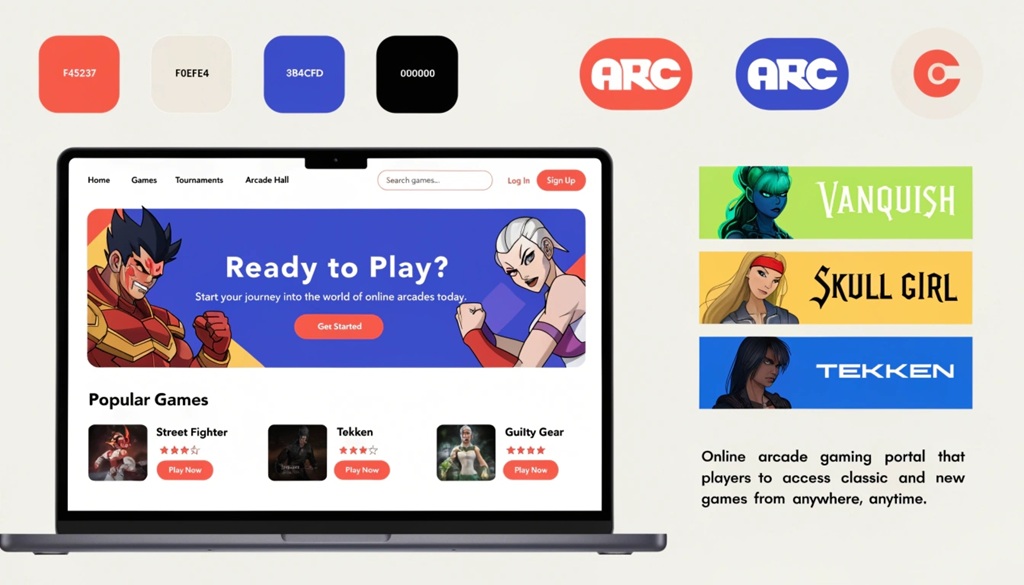
Bold, high-contrast color schemes (reds, blacks, electric blues, or neon accents) tend to match player expectations for the genre, since they echo the visual language of arcade cabinets and fighting game box art. Your logo should work at small sizes too — favicon and mobile app icon sizes — since a lot of your traffic will come through bookmarks and browser tabs.
Typography and UI Style
Choose a display font with some aggression to it — bold, angular, slightly distressed styles are common in fighting game branding — but pair it with a highly readable body font for game descriptions and navigation, so the site stays usable, not just stylish. Consistency matters more than any single design choice: use the same typography, button styles, and iconography across every page so the portal feels like one cohesive product instead of a random game aggregator.
Curate and Categorize Your Game Library With Purpose
A branded portal isn’t just a dumping ground for embedded games — it’s an organized library that reflects your brand’s taste and standards. Curation itself becomes part of your brand identity.
Organize by Sub-Genre, Not Just “Fighting”
Split your library into recognizable sub-categories — 1v1 arena fighters, tag-team brawlers, stick-figure fighters, anime-style fighters, and multiplayer battle games — so visitors can find what they want quickly instead of scrolling an undifferentiated grid. This also gives you more indexable pages for SEO, since each category page can target its own long-tail keyword variations.
Quality Control Signals Trust
Regularly test embedded games for broken links, ads that redirect unexpectedly, or malware-flagged iframes, and remove anything that fails. According to industry experts in web publishing, sites with frequent broken links or intrusive ad behavior see measurably higher bounce rates and lower return-visit rates — which directly undermines any branding effort, no matter how polished the visuals are.
Create a Consistent Voice Across All Content
Branding isn’t only visual — it’s also how your site talks to players in game descriptions, blog posts, and notifications. A consistent voice builds familiarity the same way a consistent logo does.
Write Game Descriptions That Sound Like You, Not a Press Release
Instead of copying manufacturer or developer blurbs verbatim, write short, punchy descriptions in your own house style — this is one of the easiest ways to differentiate a portal that otherwise offers the same embedded games as ten competitors. A distinct voice (playful, hype-driven, or straight-talking) becomes part of what players associate with your brand specifically.
Use Community Language
Fighting game communities have their own vocabulary — combos, tier lists, matchups, frame traps, punishes. Weaving genre-accurate terminology into your site copy signals to core fighting game fans that the portal is built by and for people who actually understand the genre, not a generic template site repurposed from another niche.
Build Trust Signals That Reduce Bounce and Increase Return Visits
Free game portals often struggle with trust because the space has a reputation for pop-ups, malware, and low-quality ad networks. Overcoming that reputation is a branding task as much as a technical one.
Transparent Ad and Monetization Practices
Clearly separate game content from advertising, avoid deceptive “click here to play” ad buttons disguised as game controls, and disclose sponsored placements where relevant. Portals that keep ad placement predictable and non-intrusive tend to retain visitors longer, since players don’t have to relearn where the “real” play button is on every visit.
Show Social Proof
Display play counts, star ratings, or simple “player favorites” badges on popular games — even lightweight social proof signals help new visitors trust that a game (and by extension, the portal) is worth their time. If you’re just starting out and don’t have real usage data yet, hold off on fabricating numbers; instead, lean on curated “staff picks” labeling until you have genuine traffic data to work with.
Give the Brand a Personality Through a Mascot or Signature Feature
One angle most portals skip entirely: a mascot or recurring signature feature can do more for brand recall than a logo alone, because it gives players something to recognize and talk about outside the site itself.
This doesn’t need to be elaborate — a simple pixel-art or vector character that appears in your loading screens, error pages, and social media posts can become shorthand for your brand in community spaces like Discord or Reddit, the same way mascots work for larger gaming brands. Pair the mascot with a signature recurring feature, such as a weekly “combo of the week” spotlight or a rotating “underrated fighter” pick, so visitors have a specific reason tied to your brand — not just your game library — to check back regularly. This kind of habit-forming content is genuinely underused in the free fighting games portal space, where most competitors focus purely on game volume rather than any ongoing content hook.
Optimize for Mobile and Cross-Device Consistency
Many fighting game fans browse on mobile even if they eventually play on desktop, so your brand needs to look and feel identical across devices, not just “functional” on smaller screens.
Responsive Design That Doesn’t Compromise Branding
Test your color scheme, logo placement, and navigation on actual mobile devices rather than just a browser resize tool, since touch targets, load times, and ad placement behave differently on mobile than desktop. A portal that looks sharp on desktop but cluttered or slow on mobile damages the brand impression for a large share of first-time visitors.
Fast Load Times Are Part of Your Brand Promise
Speed is itself a branding signal for a “free games” portal — visitors expect instant play, and slow-loading embedded games undercut that expectation immediately. Compress images, lazy-load game thumbnails below the fold, and choose a reliable host, since load speed complaints spread fast in gaming communities and can undo months of visual branding work.
Frequently Asked Questions
What makes a fighting games portal different from a general free games site?
A dedicated fighting games portal focuses its branding, categorization, and content voice specifically around the genre — sub-categorizing by fighting style, using genre-specific terminology, and curating a library that fighting game fans trust more than a generic all-genre site. This focus is what earns repeat visits from a niche audience rather than one-time traffic.
Do I need a mascot to build a strong gaming brand?
No, a mascot isn’t required, but it’s a low-cost way to create recognizable, shareable brand identity in community spaces like Discord and Reddit. A strong name, color palette, and consistent voice can build a solid brand on their own if a mascot doesn’t fit your style.
How important is game curation compared to visual branding?
Curation and visual branding work together — a beautifully designed site with broken or low-quality embedded games will still lose trust quickly. Regularly testing your library for functionality and removing unreliable games protects the brand image your design work builds.
Should I focus on SEO keywords or brand personality first?
Both should be planned together from the start, since category pages built around specific fighting game sub-genres serve SEO while also reinforcing your curation-based brand identity. Treat keyword-friendly structure and brand voice as one project, not two separate tasks.
How do I make my portal feel trustworthy compared to competitors?
Transparent ad placement, consistent design, working links, and genuine (not fabricated) usage indicators like play counts all contribute to trust. Trust builds gradually through consistent, predictable experiences across every visit rather than through any single design element.
Conclusion
Branding a fighting games online free portal comes down to consistency across every touchpoint: a name and visual identity that instantly communicate the genre, a game library organized around real player intent, a distinct voice in your content, and trust signals that counter the free-games space’s reputation for clutter and low quality. Add a signature feature or mascot to give players a reason to return beyond the game library itself, and keep the mobile experience as polished as desktop. None of these steps require a huge budget — they require deliberate, consistent choices repeated across every page of the site.