

Picture this. You face off in Street Fighter 6. Your opponent swings wildly. You punish perfectly every time. Frame data makes that possible. It measures move timings in frames. Each frame equals one sixtieth of a second. Pros use it to predict and counter. At EVO 2025, Street Fighter 6 hit 320,433 peak viewers. Over 4,000 entered that tournament. Frame data separates casuals from champions. This guide breaks it down simply. You will learn to read it, use it, and win more matches.
What Is Frame Data?
Frame data lists timings for every move. Developers design games around it. Players study it to gain edges. For instance, it shows how long a punch takes to hit. Then, it reveals recovery time after. Therefore, you know when to strike back.
Most fighting games run at 60 frames per second. One frame lasts about 16.7 milliseconds. However, focus on relative speeds. A 5 frame move beats a 7 frame one always. Additionally, frame data includes damage, guard type, and invincibility.
You find it in tables online or training modes. Sites like Dustloop and SuperCombo host full lists. Pros memorize key moves first. Then, they lab the rest. Frame data turns guesses into strategy.
The Building Blocks: Startup, Active, and Recovery Frames
Every attack splits into three phases. Startup winds up the move. Active lets it hit. Recovery ends it. Together, they form total frames. Calculate total as startup plus active plus recovery minus one. This accounts for overlap.
Startup Frames Explained
Startup counts frames from input to first hit. It includes that first active frame. A 5 frame startup means it hits on frame 5. Lower numbers win neutral faster. For example, jabs often startup in 4 frames.
You stay vulnerable during startup. Opponents interrupt easily. Therefore, fast startups check pressure. In Street Fighter 6, lights average 4 to 5 frames. Practice them for punishes.
Active Frames in Action
Active frames extend the hitbox. More frames mean longer reach in time. Multi hit moves show gaps like 3(3)3. That means three active, three gap, three more.
Use long active for anti airs. They catch jumps reliably. However, short active suits pokes. Meaty hits land late in active for bonus advantage. Thus, time them on wakeups.
Recovery Frames and Vulnerability
Recovery follows active. You cannot act until it ends. Whiffed moves leave you open longest. For instance, a fireball might recover in 30 frames. Punish with anything faster.
Short recovery keeps pressure. Long recovery invites counters. Always check this in tables. It decides safe pokes.
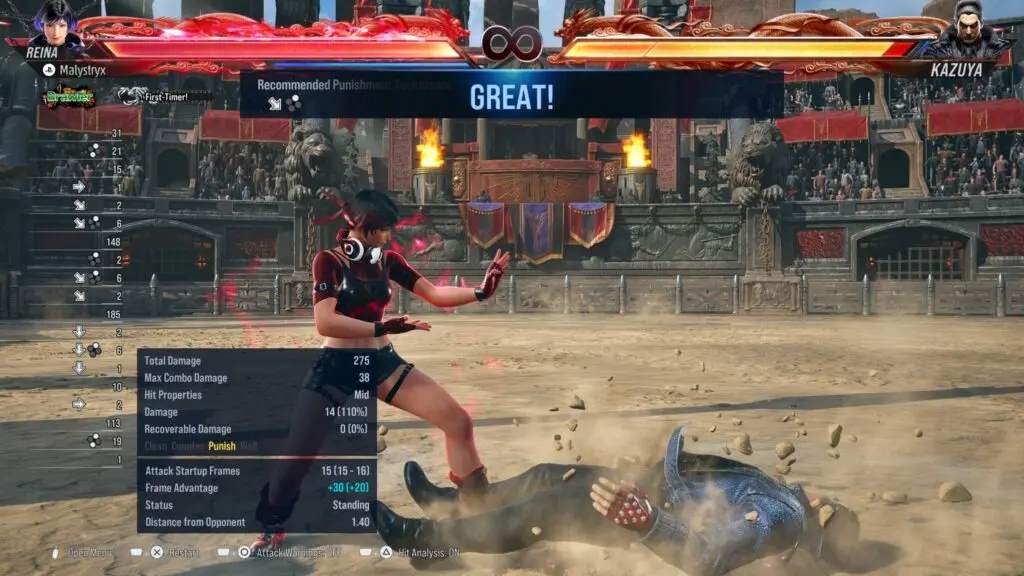
Frame Advantage: The Key to Pressure and Punishes
Advantage shows who acts first after contact. Positive means you plus frames. Negative puts you minus. Zero ties.
Calculate on block as blockstun minus remaining active plus recovery. Hit uses hitstun instead. Games vary blockstun by attack level.
On Block and On Hit Advantages
On block plus 2 lets you act two frames early. Chain another plus move. On hit, combos follow naturally. However, meaty on hit maximizes it.
Minus 5 on block? Opponent punishes with 4 frame jab. Therefore, space unsafe moves carefully.
Safe vs Unsafe Moves
Safe moves sit at zero or plus on block. Spam them in neutral. Unsafe go minus. Use for big rewards like launchers.
Test spacing. Unsafe at tip might turn safe. Pros mix them for mind games.
Reading Frame Data Tables Like a Pro
Tables pack info tight. Columns show startup, active, recovery, on block, on hit. Rows list moves.
- Damage: Hits dealt.
- Guard: High, low, mid.
- Startup: i.e., 13f.
- Active: i.e., 3+3+3.
- On Block: +1 or -4.
- Invuln: Throw or strike frames.
Start with normals. Note fastest punish. For example, Ryu’s medium punch in SF6: 7f startup, +2 on block. Chain it safely.
Practice daily. Soon, you read intuitively.
Frame Traps and Pressure Strings
Pressure chains safe moves. Opponent blocks forever. Add frame traps for mash punishment.
Frame traps gap one to three frames. Your next move startups faster than opponent mash. For instance, plus 2 into 4f light. Opponent 5f jab trades or loses.
Build strings like this:
- Safe poke.
- Trap gap.
- Mix throw or overhead.
Thus, force defense. Break with reversals.
Meaty Hits and Advanced Timing
Meaty lands mid active. Gains max advantage: blockstun minus recovery. Perfect for okizeme.
Time on knockdown wakeup. Dash in late. For example, May’s 5K in Guilty Gear meaties to plus 2.
Advanced players meaty multi hits. They cover options. Practice in training mode.
Frame Data in Popular Games: SF6 and Tekken 8
Modern titles shine frame data tools.
Street Fighter 6 Features
SF6 shows frame advantage live in training. Red minus warns punishes. Green plus confirms pressure.
Drive Rush cancels boost speed. Frame meter tracks it. Over 7,000 Steam players peak daily. Lab modern controls too. They simplify inputs.
Ryu’s 5MP: 7f startup, active 3, recovery 12, +2 block. Classic poke.
Tekken 8 Specifics
Tekken tracks 100 plus moves per character. Frames decide strings. i14 launchers punish hard.
Heat system alters data. Tools like Wavu Wiki list all. Jin’s df1: 15f startup, high crushes lows.
2,500 entered EVO 2025 Tekken 8. Frames win sidesteps.
Tools and Resources to Study Frame Data
Access free sites now.
- Dustloop: Guilty Gear, Under Night In-Birth.
- SuperCombo Wiki: Street Fighter, King of Fighters.
- Wavu Wiki: Tekken.
- Infil.net: Glossary basics.
In game, use training dummies. Record opponents. Slow motion reveals timings.
Apps like Frame Assistant for SF6 help. Update for patches.
How to Practice and Apply Frame Data
Start simple. Lab five moves per session. Note startup and advantage.
- Block opponent strings. Punish unsafe.
- Record self. Check whiffs.
- Spar friends. Call frames aloud.
Track win rate. It climbs with knowledge. Pros review VODs frame by frame.
Mix intuition later. Frames guide, muscle builds.
Related:
- Best Action-Adventure PC Games to Play in 2025
- Best Action-Adventure Games for PC: Immersive Stories, Combat, and Exploration
- 10 Must-Play Classic RPGs for Timeless Adventures
Conclusion
Frame data unlocks fighting games. Master startup, active, recovery. Grasp advantages for pressure. Traps and meaties add depth. SF6 and Tekken 8 make it accessible.
You hold the edge now. Head to training mode. Lab one character today. Watch ranks soar.
FAQs
What Is a Frame in Fighting Games?
A frame measures time. Games run 60 per second. One frame equals 1/60th second. Use it for all timings.
How Do I Access Frame Data for Street Fighter 6?
Check SuperCombo Wiki. Use in game training mode. It displays live advantages. Perfect for labbing.
Why Are Frame Traps Important?
They punish mashing. Create tiny gaps. Next move hits counters. Builds scary pressure.
What Makes a Move Safe on Block?
Zero or plus frames. Opponent cannot punish easily. Chain freely in strings.
Can Beginners Learn Frame Data Quickly?
Yes. Focus on jabs and punishes first. Practice 15 minutes daily. Results show fast.
References