
The best fighting game for beginners has a low execution barrier, a strong practice mode, and a welcoming online community. It doesn’t have to be the most popular title on the market. Fighting games have a reputation for being brutally hard to learn, and that reputation is partly earned. Complex motion inputs, frame data, and lobbies full of veteran players can make your first few matches feel more like punishment than fun
But don’t let that scare you off. The genre has changed a lot in recent years. Several modern titles now aim to get new players competent within a few hours instead of a few months. The trick is knowing what to look for, instead of picking whatever game your favorite streamer plays.
This guide covers the practical factors that matter most when you pick your first fighting game. Use it to find a game that fits how you want to play, not just what’s trending right now.
Start With Your Control Scheme Comfort Level
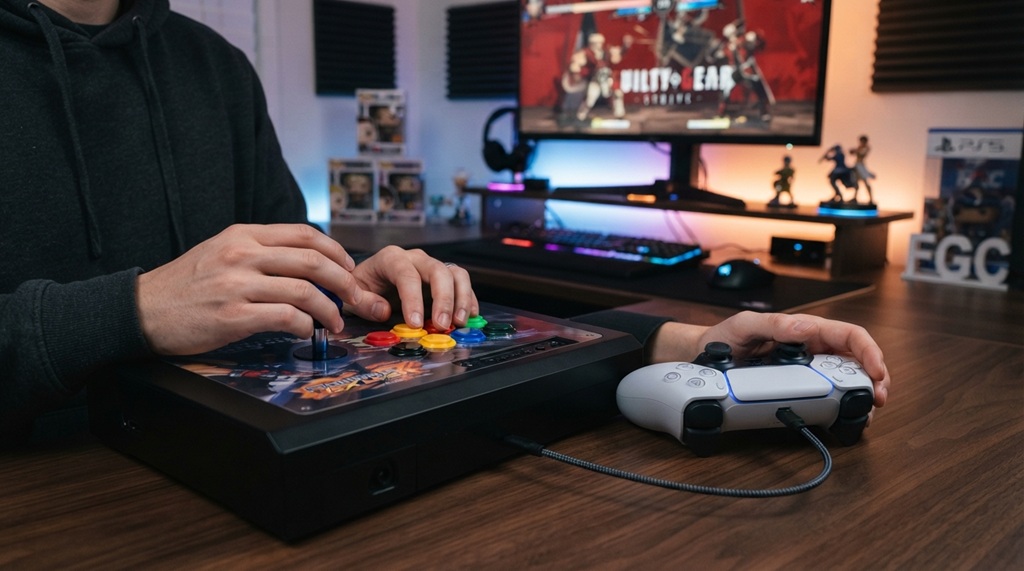
Your comfort with controls should be your first filter, because it shapes how much fun your first ten hours will be. Fighting games generally fall into two camps: traditional motion-input games and modern simplified-input games. Traditional games use quarter-circles and directional inputs. Modern games let you pull off special moves with a single button or a short combo.
Traditional Motion Inputs
Games like Street Fighter 6 (in Classic control mode) or Tekken 8 require directional motions combined with button presses. These take longer to feel natural. But the muscle memory you build carries over well if you branch out into other traditional fighters later.
Modern or Simplified Inputs
Games like Street Fighter 6‘s Modern controls, Guilty Gear Strive, or Dragon Ball FighterZ let you execute special moves with much simpler inputs. This lowers the barrier to entry. You can focus on strategy and timing instead of wrestling with your controller. The tradeoff is usually a smaller moveset or less precise control over which move comes out.
If you’ve never played a fighting game before, pick a title with a simplified control option. Even a toggle setting can save you a lot of early frustration.
Look for Robust Tutorials and Comprehensive Training Modes
A fighting game is truly beginner-friendly only if it actively teaches you how to master its mechanics rather than just throwing you into the arena. Unlike older titles that left players to figure things out through trial and error, modern fighting games prioritize onboarding, offering structured tutorials and interactive training modes that are as well-designed as their online multiplayer. These features break down complex combos, defensive techniques, and frame data into digestible lessons, making the learning curve far less intimidating. Best of all, even if you lack a high-end setup or local storage space for these feature-rich games, play cloud fighting games on PC with no download and start practicing immediately without hardware limitations holding you back.
Before you buy, check whether the game includes:
- A structured tutorial that explains core mechanics like blocking, spacing, and punishing, not just a list of button inputs
- A training mode with adjustable dummy behavior, so you can practice combos against a CPU that reacts realistically
- A combo trial or challenge mode that increases in difficulty gradually
- In-game frame data or move information, so you don’t need a third-party wiki to understand basic move speed
Newcomers frequently praise Street Fighter 6 and Guilty Gear Strive for their tutorial systems. Both games use visual explanations to break down abstract concepts like frame advantage.
Consider the Size and Friendliness of the Roster
A smaller, well-designed roster often works better for beginners than a massive one. It cuts down the number of matchups you need to learn and makes each character feel distinct. When a roster is huge, similar characters can blur together, which makes it harder to build a mental model of who does what.
Look for games where:
- Each character has a clear identity, such as rushdown, zoner, or grappler, instead of feeling like a reskin of another character
- At least one or two characters are explicitly designed as beginner-friendly with simpler combos
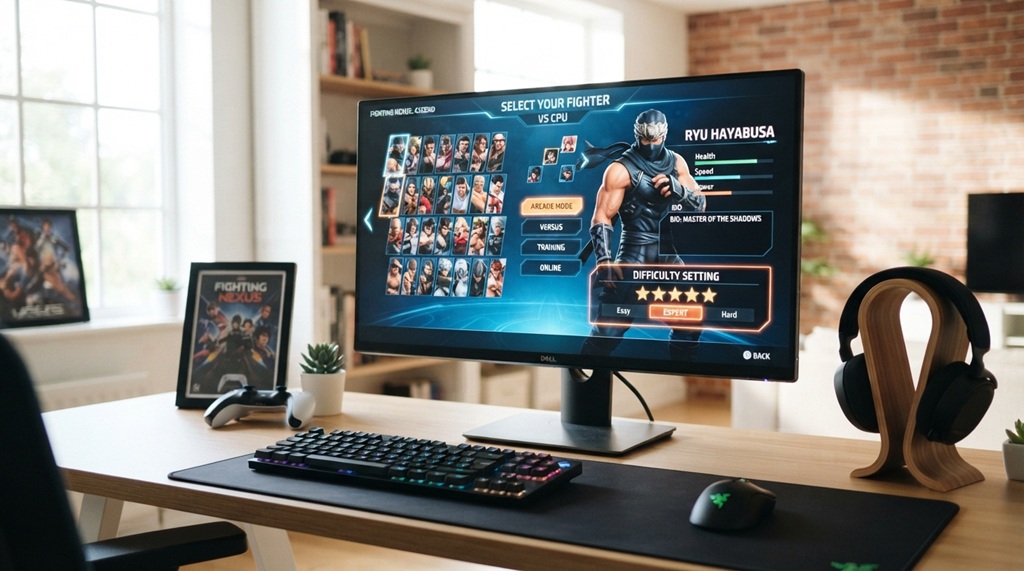
- The character select screen or an in-game guide explains playstyle differences in plain language
This doesn’t mean you should avoid games with big rosters. It just means you shouldn’t feel pressured to learn every character right away. Pick one or two that match your playstyle and go deep instead of wide.
Check the Health of the Online Community and Matchmaking
A thin or toxic online population kills motivation faster than a hard tutorial ever could. Give this factor real weight in your decision. Even a great game can feel miserable if you’re stuck fighting players far above your skill level with no matchmaking safety net.
Signs of a Healthy Beginner Environment
- Skill-based matchmaking or a clearly separated ranked and casual system
- A visible beginner or newcomer tag in matchmaking, which some modern titles now offer
- An active community on platforms like Discord or Reddit, where new players get real answers instead of gatekeeping
- Regular updates and balance patches, which usually signal the developer still supports new and existing players
Industry experts who cover the fighting game community note that titles with strong crossplay support and rollback netcode tend to keep new players longer. Matches simply feel fairer and more responsive.
Think About Single-Player Content, Not Just Versus Mode
If you’re not ready for ranked matches on day one, single-player content becomes your main way to learn the game. Don’t overlook it when you compare titles. Some fighting games focus almost entirely on online versus play. Others offer story modes, arcade ladders, or mission-based content that doubles as practical training.
Consider these options:
- Story-driven fighters like Mortal Kombat 1 or Injustice 2 use cinematic story modes to teach mechanics gradually while giving you a reason to keep playing solo
- Mission-based games like Dragon Ball FighterZ layer character-specific missions on top of story content
- Arcade-style ladders, found in most traditional fighters, let you practice against CPU opponents of increasing difficulty at your own pace
Single-player content isn’t just a bonus feature for beginners. It’s often the safest space to internalize combos and matchup knowledge before you take those skills online.
Factor In Genre Style: 2D, 3D, and Platform Fighters
Pick the sub-style that matches your instincts, and learning will feel far more natural. Fighting games aren’t one single genre. The core mechanics differ quite a bit depending on the sub-type.
2D Fighters
Games like Street Fighter 6, Guilty Gear Strive, and Mortal Kombat 1 move on a single horizontal plane. Spacing, footsies, and special move timing form the core skillset here. Most players consider this the classic entry point into the genre.
3D Fighters
Games like Tekken 8 and Virtua Fighter let you sidestep and move through three-dimensional space. These games tend to emphasize positioning and reactive punishes over projectile spacing. They can feel intuitive if you already play other 3D action games.
Platform Fighters
Games like Super Smash Bros. Ultimate or Multiversus replace health bars with percentage-based knockback. Basic attacks are simple to execute, and the party-game feel lowers the pressure of early losses. Many consider these the most approachable entry point for total beginners.
If you’re unsure which style suits you, try a platform fighter first for the gentlest start. 2D fighters offer the most traditional skillset, one that transfers across the wider genre.
Frequently Asked Questions
Is Street Fighter 6 good for a total beginner?
Yes. Its Modern control scheme, in-depth tutorials, and visual explanations make it one of the most commonly recommended entry points. It also has a large, active community, so matchmaking and outside resources are easy to find.
Should I play offline or online first as a new fighting game player?
Start offline with training mode and story or arcade content. Get comfortable with your character’s basic combos and blocking first. Jumping online too early, before you understand core defense, is a common reason new players get discouraged.
Do I need a fight stick or arcade controller to get started?
No. A standard controller works fine for beginners and even for many competitive players. Fight sticks are a personal preference some players adopt later, not a requirement for learning the fundamentals.
How long does it typically take to feel comfortable in a new fighting game?
This varies by person and game. Many players report feeling reasonably competent with basic combos and blocking within 10-20 hours of focused practice. Matchup knowledge and advanced strategy take longer and develop through real match experience.
Is it better to pick one fighting game or try several before committing?
Try two or three demos or free trials before you commit. Control schemes and pacing can feel very different between games. Many fighting games now offer free trial weekends or rollback netcode betas so newcomers can test the waters before buying.
Conclusion
Choosing the best fighting game for beginners comes down to matching the game’s design to your own comfort level. Don’t chase whatever title has the biggest esports scene. Pay attention to control complexity, tutorial quality, roster clarity, community health, single-player content, and which genre sub-style fits you best. Get those factors right, and your first fighting game will feel like a fun challenge to grow into, not a wall you keep bouncing off of.