

Role-playing games (RPGs) have evolved significantly over the past four decades. From dungeon-crawling adventures on early PCs to sprawling open-world sagas on modern consoles, RPGs offer players immersive experiences shaped by choice, story, and mechanics. A critical design element that defines an RPG’s identity is its approach to gameplay structure: exploration-based vs. linear gameplay.
This article delves deep into the philosophies behind these two paradigms, how they shape player experiences, and what the future holds for RPG design.
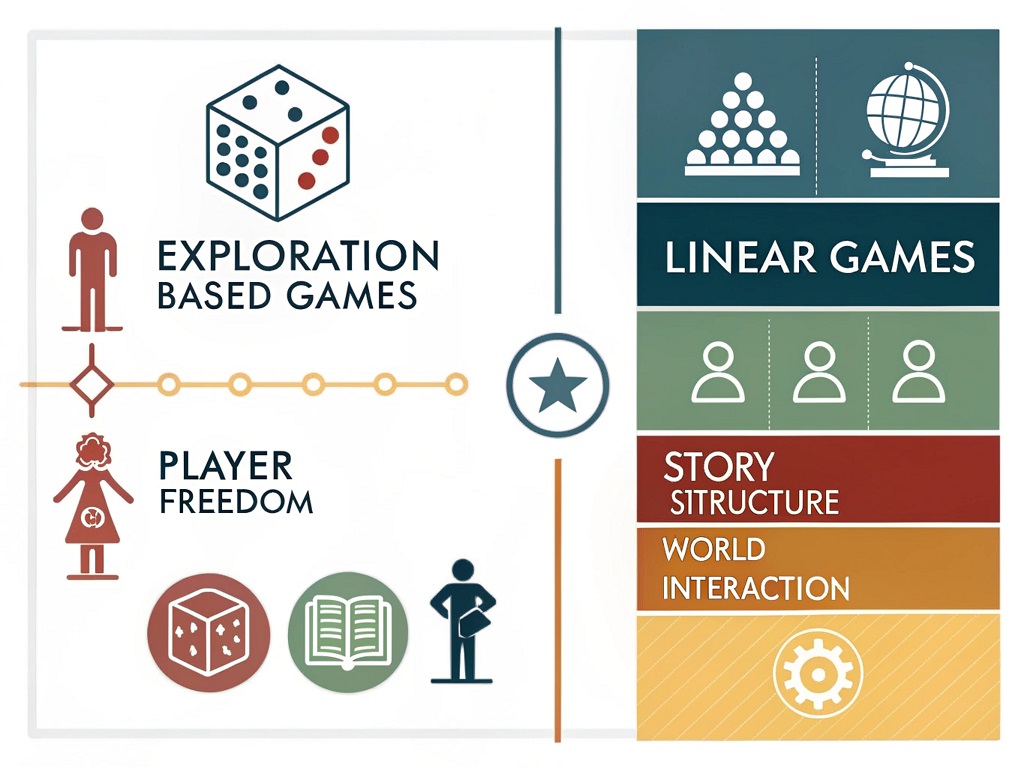
The Evolution of RPG Design: A Brief History
Origins of Linear Gameplay
-
Tabletop Influence: Early RPGs like Dungeons & Dragons emphasized guided storytelling and structured paths, influencing early digital RPGs.
-
Classic JRPGs: Games like Final Fantasy I–X followed a mostly linear narrative path:
-
Clear chapter-based progression
-
Pre-set character arcs and plot points
-
Emphasis on storytelling and character development
-
Rise of Exploration
-
Western RPGs Lead the Charge: Ultima, The Elder Scrolls, and Fallout prioritized open-world discovery.
-
Technological Advancements:
-
Larger memory and better rendering enabled more expansive maps
-
AI and procedural generation allowed for emergent gameplay
-
Defining the Concepts
What Is Linear Gameplay in RPGs?
Linear gameplay offers a structured path through the game, often centered around a narrative arc.
Key characteristics:
-
Predetermined storyline with minimal deviation
-
Locked areas until specific progression points
-
Pacing controlled by the developer
-
Heavily scripted events and cutscenes
Notable examples:
-
Final Fantasy X
-
Persona 5
-
Dragon Age II
What Is Exploration-Based Gameplay?
Exploration-based RPGs offer freedom for players to carve their own journey.
Key characteristics:
-
Open or semi-open world design
-
Optional side quests and branching narratives
-
Environmental storytelling and emergent gameplay
-
Emphasis on player choice and agency
Notable examples:
-
The Elder Scrolls V: Skyrim
-
The Witcher 3: Wild Hunt
-
Breath of the Wild
Comparative Analysis: Exploration vs. Linear Gameplay
| Feature | Exploration RPGs | Linear RPGs |
|---|---|---|
| Player Freedom | High — choose quests, paths, outcomes | Low — follow a scripted narrative path |
| Replayability | High — multiple outcomes and hidden content | Moderate — same story, minor variations |
| Storytelling Control | Lower — player may miss key events | High — tight control over pacing and tone |
| World Design | Expansive, interactive environments | Focused, detailed levels |
| Accessibility | Can overwhelm new players | Easier to grasp, guided progression |
| Development Cost | Typically higher due to open-world systems | Lower due to focused content |
| Narrative Impact | Emergent and player-shaped | Author-driven with emotional payoff |
Benefits of Exploration-Based RPG Design
1. Enhanced Player Agency
-
Players shape their own journey
-
Multiple outcomes encourage replayability
-
Greater emotional investment in character decisions
2. Immersive Worldbuilding
-
Discover lore through environments
-
Engage with NPCs in dynamic ways
-
Organic storytelling outside of cutscenes
3. Emergent Gameplay Opportunities
-
Systems that interact with each other (e.g., weather + AI + combat)
-
Player-made stories enhance game longevity
Challenges of Exploration-Based Design
1. Narrative Dilution
-
Risk of players missing key story beats
-
Harder to deliver a cinematic or tightly-woven tale
2. Development Complexity
-
Larger world maps need more assets and QA
-
Requires scalable systems for quests, AI, and dialogue
3. Player Overwhelm
-
Too many choices can paralyze new players
-
Risk of burnout from content bloat
Benefits of Linear RPG Design
1. Focused Storytelling
-
Deep, impactful narratives with strong character arcs
-
Easier to guide emotional pacing and player reactions
2. Streamlined Gameplay Experience
-
Consistent challenge curve
-
Easier onboarding for new players
3. Lower Development Overhead
-
Fewer variables to test and optimize
-
Predictable player paths reduce edge-case bugs
Challenges of Linear RPG Design
1. Limited Replayability
-
Once the story is known, motivation to replay declines
-
Choices often feel cosmetic rather than impactful
2. Reduced Player Freedom
-
Players may feel railroaded or boxed in
-
Less opportunity to “play your way”
3. Shorter Engagement Time
-
Less opportunity for exploration or sandbox play
-
Content may feel finite and restrictive
Hybrid Approaches: Blending Linear and Exploration
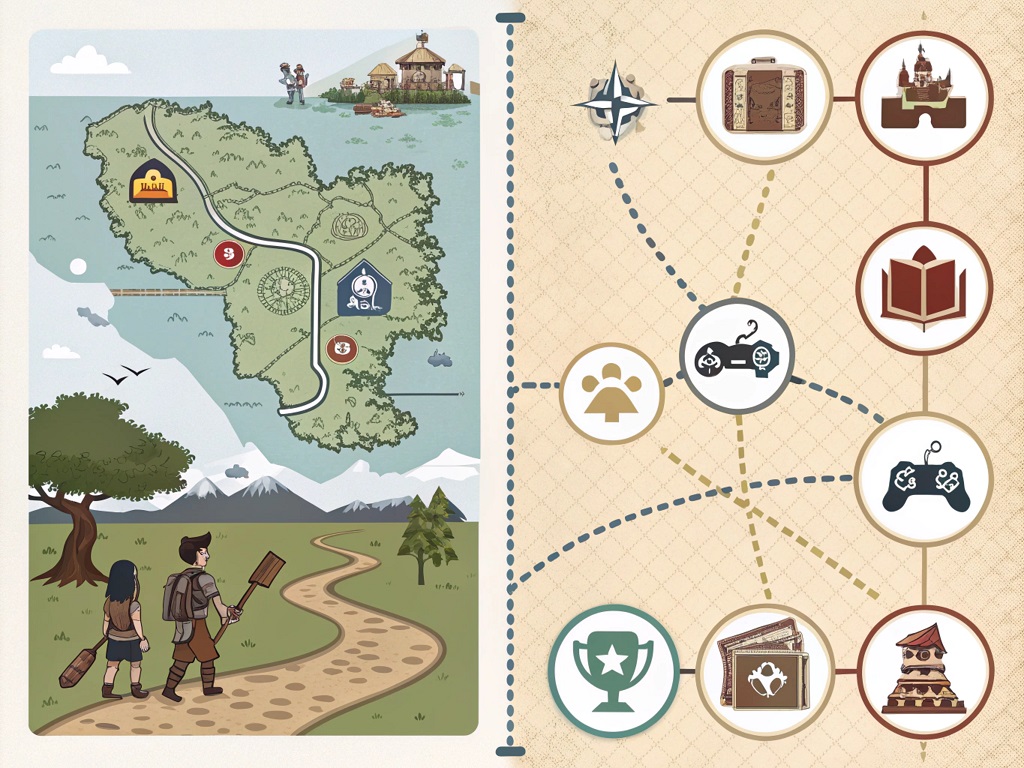
The Rise of Semi-Open World Design
Many modern RPGs now incorporate elements from both paradigms.
Examples:
-
Mass Effect Trilogy: Linear mission structure + exploration on side quests
-
Cyberpunk 2077: Open world with story-heavy core quests
-
Horizon Zero Dawn: Exploration with gated narrative progression
Benefits of Hybrid Design
-
Offers story control and player freedom
-
Broader appeal to different player types
-
Potential for better pacing and progression control
Design Considerations for Developers
Audience and Platform
-
Console vs. PC vs. mobile
-
Hardcore RPG fans vs. casual players
Storytelling Goals
-
Is the game character-driven or system-driven?
-
Should every player have a consistent experience?
Budget and Team Size
-
Exploration games often require:
-
World designers
-
Narrative systems engineers
-
Extensive QA testing
-
-
Linear RPGs can focus more on writing, scripting, and polish
The Current Landscape of RPG Design
Exploration-Dominant Titles (2020–2025)
-
Baldur’s Gate 3
-
Elden Ring
-
Starfield
These games push boundaries in world design and player freedom.
Recent Linear Standouts
-
Persona 5 Royal
-
Octopath Traveler II
-
Final Fantasy VII Remake
These titles prove there’s still a strong market for focused storytelling.
Community Perspectives
What Do Players Want?
-
According to a 2024 GameDev survey:
-
58% prefer open-world RPGs for immersion
-
42% enjoy linear RPGs for their narrative strength
-
Developer Opinions
-
Todd Howard (Bethesda): “We want players to write their own stories.”
-
Yoko Taro (Nier): “A story must be told with precision and timing.”
Future Trends in RPG Design
AI-Driven Exploration
-
Procedural content that feels handcrafted
-
Dynamic NPC behavior and quest generation
Modular Storytelling
-
Story arcs that adapt based on exploration choices
-
Greater narrative flexibility without losing cohesion
Cloud and Cross-Platform RPGs
-
Massive shared worlds with both linear and open paths
-
Social gameplay interwoven with personal exploration
Read More Also: Unearthing the Thrills: The Enduring Legacy of Rise of the Tomb Raider’s Challenges
Review: Exploration vs. Linear RPGs — Which Is Better?
Verdict: There is no one-size-fits-all approach. Both styles offer rich experiences, but serve different types of players and storytelling goals.
Exploration RPGs excel in:
-
Immersion
-
Player autonomy
-
World depth
Linear RPGs excel in:
-
Focused emotional storytelling
-
Accessibility
-
Pacing and tension control
The best RPGs often blend both — giving players freedom while crafting moments of precision and drama.
Read More Also: Can You Throw Down? The Best Games to Test Your Fighting Spirit
Final Thoughts
As RPGs continue to evolve, the tension between exploration and linearity remains a core design challenge — and opportunity. Whether you’re roaming the plains of Hyrule, or following Joker’s journey through Tokyo, both styles offer unique and unforgettable experiences. For developers and players alike, understanding the strengths and limitations of each model can lead to richer, more fulfilling RPG worlds.
FAQs
What is the main difference between exploration and linear gameplay in RPGs?
The primary difference lies in player freedom and narrative structure:
-
Exploration-based RPGs allow players to roam freely, choose quests, and shape outcomes.
-
Linear RPGs follow a pre-defined path where players experience a carefully structured narrative with limited deviation.
Can a game have both exploration and linear elements?
Yes. Many modern RPGs adopt a hybrid approach, combining open-world exploration with linear main quests. Examples include Mass Effect, The Witcher 3, and Horizon Zero Dawn. These games balance player agency with a structured story arc.
Are exploration RPGs always better than linear ones?
Not necessarily. The better choice depends on:
-
Player preference
-
Storytelling goals
-
Game genre and platform
Exploration RPGs offer freedom and immersion, while linear RPGs provide tighter storytelling and emotional pacing.
Which style is better for storytelling?
Linear RPGs are generally better for focused, emotional storytelling. They allow developers to guide the player through narrative arcs and create powerful, cinematic moments. However, exploration RPGs can tell compelling emergent stories shaped by the player’s actions.
Why are exploration-based RPGs more complex to develop?
Exploration games often require:
-
Larger and more detailed world maps
-
AI systems for dynamic environments and NPCs
-
Procedural quest generation or branching narratives
-
More intensive QA and balancing across many player paths
These factors increase both development time and cost.
Do exploration RPGs have better replay value?
Typically, yes. Exploration RPGs offer:
-
Multiple story outcomes
-
Hidden areas and quests
-
Player-driven roleplay options
This variety encourages players to revisit the game from different angles.
Are linear RPGs becoming obsolete?
No. Despite the popularity of open-world games, linear exploration vs linear gameplay RPGs remain relevant. Games like Persona 5 Royal and Final Fantasy VII Remake show that players still appreciate focused, high-quality narratives. Both styles can thrive side-by-side in today’s market.
What type of RPG is better for new players?
Linear RPGs are often more approachable for newcomers due to:
-
Guided progression
-
Clear objectives
-
Fewer overwhelming choices
Exploration exploration vs linear gameplay RPGs can sometimes feel daunting for players unfamiliar with the genre.