
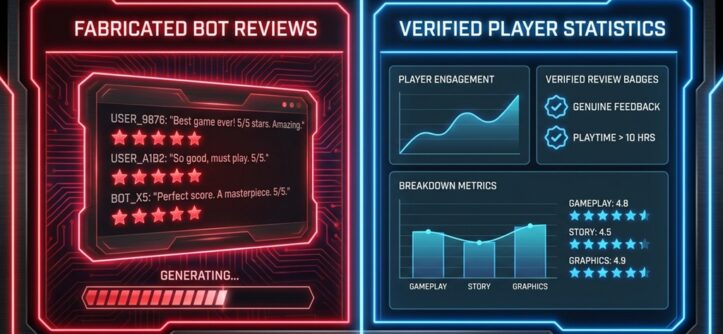
Fake game review scores are easy to spot once you know the signs. Look for a flood of 5-star reviews posted on the same day, vague praise with no real details, and scores that ignore obvious bugs. Real ratings come from verified buyers, detailed platforms, and communities that argue about the game’s flaws.
You’ve probably felt this before. A game gets a 9/10 score everywhere. You buy it. Then you find bugs, empty content, and a story that falls apart in chapter two. This happens because review scores can be bought, rushed, or influenced by publishers.
This guide shows you exactly how to tell a real score from a fake one. You’ll also learn where gamers go for honest opinions, and what red flags to watch for before you spend your money.
Why Game Review Scores Get Inflated in the First Place
Review scores get inflated because money and access are on the line. Publishers send early copies to reviewers who need to keep good relationships with them. This creates pressure, even when no one admits it out loud.
Here’s how it usually happens:
Early Access and Review Copies
Big publishers give free early copies to selected outlets. Some outlets fear losing future access if they publish a harsh review. This isn’t always corruption. It’s simply human nature under pressure.
Embargo Timing Games
Publishers often set a review embargo that lifts right at launch, or even after. This gives reviewers little time to test the game properly. A rushed review is more likely to miss bugs and give a generous score.
Review Bombing in Reverse
Most people know about review bombing, where angry fans flood a game with low scores. But the opposite also happens. Fan armies, bots, or paid services can push scores up unfairly. This is sometimes called “review stuffing.”
Affiliate and Ad Pressure
Some gaming sites earn money through affiliate links or ads tied to a publisher. This can create quiet pressure to rate games higher than they deserve. Not every site does this, but it’s worth knowing the incentive exists.
Red Flags That Signal a Fake or Manipulated Score
A fake score usually has a pattern. Genuine reviews vary in tone and detail. Fake ones tend to repeat the same phrases and avoid specifics.
Watch for these warning signs:
- A sudden spike of 5-star reviews in a short time window. Real reviews trickle in over weeks. Fake ones often arrive in bursts.
- Vague praise with no specific details. Phrases like “amazing game, 10/10” without mentioning gameplay, story, or mechanics are a red flag.
- Reviews that ignore known bugs. If a game has documented server crashes or glitches, but every review calls it “flawless,” something’s off.
- Nearly identical wording across multiple reviews. This often points to bot activity or a coordinated campaign.
- A score that jumps dramatically after a controversy. If criticism appears, followed by a wave of suspiciously positive reviews, treat it with caution.
If you spot two or more of these signs together, slow down before trusting the score.
Where to Find Authentic Player Ratings
The most reliable game ratings stem from broad, aggregated user consensus rather than isolated critic scores, as platforms combining thousands of verified player experiences are inherently harder to manipulate than a single review outlet. If you want to bypass online scores entirely and evaluate raw, unreleased titles yourself, explore super MAGFest 2027: Dates, Tickets, Schedule, and Games to get hands-on experience on the expo floor long before public reviews drop.
Steam User Reviews (With a Filter)
Steam shows a simple “Positive” or “Negative” percentage based on real purchasers. Click into the recent reviews tab, not just the overall score. Recent reviews reveal current server issues or post-launch problems that the overall score might hide.
OpenCritic and Metacritic, Used Together
Metacritic averages critic scores, but critic and user scores can tell very different stories. OpenCritic is useful because it clearly separates “Top Critic” scores from general outlets. Comparing both platforms gives you a fuller picture than either one alone.
Reddit and Discord Communities
Gaming subreddits and Discord servers often discuss issues long before official reviews mention them. According to industry experts, communities catch problems like server instability or pay-to-win mechanics faster than traditional review outlets. Search a game’s subreddit for “review” or “worth it” to see real conversations.
YouTube Reviews With Actual Gameplay Footage
A reviewer who shows raw, unedited gameplay is harder to fake than a written score. Watch for reviewers who show failures, glitches, or boring moments, not just highlight reels. This kind of transparency usually signals more honesty.
How to Read Between the Lines of Any Review Score

A single number rarely tells the full story. The real value is in the written review, not the score attached to it.
Check the Review Date Against the Patch History
A 9/10 score from launch week means very little six months later. Games change through patches, content updates, and sometimes major overhauls. Always check when a review was published compared to the game’s current version.
Look for Score Breakdowns, Not Just One Number
Sites that break scores into categories like gameplay, story, and technical performance give you more useful information. A game might score high on story but low on technical stability. That distinction matters depending on what you care about.
Notice What the Reviewer Actually Played
Some reviews are based on a few hours of early access. Others come after 40+ hours of full release. A review based on limited playtime can miss late-game issues, grinding problems, or repetitive content that only shows up over time.
A Simple 3-Minute Check Before You Trust Any Score
You don’t need to be an expert to verify a game’s reputation. This quick method works for almost any title.
- Search “[game name] review” on YouTube and sort by upload date. Recent videos reveal current problems better than launch-day hype.
- Check the Steam “Recent Reviews” percentage, not just “All Reviews.” This shows how players feel about the game right now.
- Search the game’s subreddit for complaints. Type “issues” or “bugs” alongside the game’s name to surface real player frustrations.
This three-step method takes about three minutes. It gives you a much clearer picture than trusting one glowing headline score.
Frequently Asked Questions
Can game review scores really be bought?
Direct bribery is rare and risky for outlets caught doing it. However, softer forms of influence exist, like early access perks, exclusive interviews, or advertising relationships. These create pressure without any money changing hands directly.
Why do Metacritic and Steam scores often disagree?
Metacritic mainly reflects critic opinions, often based on early access before launch-day patches. Steam reflects real buyers, including those who played after major updates or bug fixes. Both numbers matter, but they measure different things.
Are user reviews always more trustworthy than critic reviews?
Not always. User reviews can be flooded by review bombing campaigns tied to unrelated controversies. The safest approach is comparing both critic and user scores, then reading a handful of detailed written reviews yourself.
How can I tell if a YouTube review is sponsored?
Check the video description for sponsorship disclosures, which are legally required in most countries. Also watch for a reviewer who avoids any criticism at all. A completely one-sided review, positive or negative, deserves extra scrutiny.
What’s the fastest way to check if a game is worth buying?
Use the three-minute method: check Steam’s recent review percentage, search YouTube for recent gameplay reviews, and scan the game’s subreddit for common complaints. This combination usually reveals the truth within minutes.
Final Thoughts
Fake or inflated game review scores are common, but they’re not hard to spot once you know the pattern. Watch for vague praise, review bursts, and ignored bugs. Then cross-check scores using Steam’s recent reviews, community discussions, and detailed written reviews instead of a single number.
No single score tells the whole story. But a few smart checks, done in just a few minutes, can save you from wasting money on a game that isn’t what it seems.