

Remember the thrill of arcades in the 1980s? Quarters clinking, screens glowing, crowds cheering. Karate Champ burst onto the scene in 1984 and changed everything. This fighting game lets you step into the dojo as a karateka. You face off against opponents in intense one-on-one battles. Data East released it, and it quickly became a smash. It topped arcade earnings in 1985, pulling in top revenue that year. The arcade industry hit $5 billion in US revenue by 1981, showing the boom of these games. Karate Champ helped spark the one-on-one fighter genre that still thrives today.
Game Overview and Setup
Karate Champ puts you in a virtual karate match. You control a white gi fighter. Your goal? Defeat the opponent in best-of-three rounds. Each scene tests your skills with different foes. The game draws from real karate moves for authenticity. You start in a simple dojo. Backgrounds stay basic to keep focus on the action.
Insert a quarter to begin. The cabinet uses dual joysticks. One for each hand. No buttons here. You pull back and push forward to attack. The setup mimics real martial arts stances. Practice mode lets you warm up first. This builds muscle memory before real fights.
Arcades loved this game for its fresh take. It stood out from shooters like Pac-Man. Players flocked to master its timing. Success came from precision, not speed mashing. That innovation made it a pioneer in arcade fighting games.
Controls and Basic Mechanics
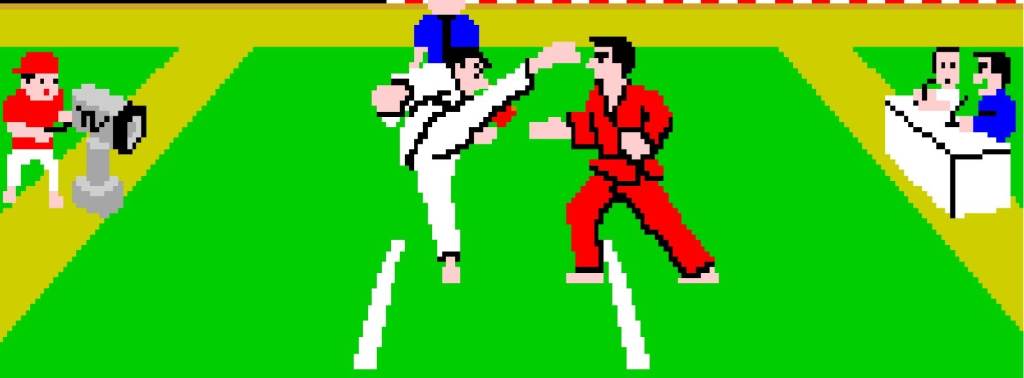
Master the controls to succeed. Use the left joystick for your left hand. Right joystick for your right hand. Pull back to guard or position. Push forward to strike. Directions matter. Up adds height to punches or kicks. Down aims low.
The game runs in real-time combat. Time your inputs right. Opponents mirror your moves sometimes. Block by pulling back as they attack. Successful hits score points. Misses leave you open. Matches end when one side wins two rounds.
- Left joystick: Controls left arm and leg moves.
- Right joystick: Handles right side actions.
- No buttons: All input through joystick pushes and pulls.
Energy bars show health. They drop with hits. Last one standing wins the round. The CPU opponent starts easy but ramps up. Scenes progress through 12 levels. Beat them all to loop back.
This dual setup felt new in 1984. It forced players to think like fighters. Arcades saw lines form as kids practiced combos.
Performing Moves and Attacks
Karate Champ shines in its move set. Execute punches, kicks, and blocks with joystick combos. Basic punch: Push one joystick forward. Add direction for high or low. Double punch needs both joysticks timed together.
Kicks work similar. Pull one back, push the other forward for a roundhouse. Specials like flying kicks require sequence. Practice reveals them. The manual stresses timing over force. Opponents dodge if you rush.
Key moves include:
- Straight punch: Forward on one stick.
- Uppercut: Up and forward together.
- Side kick: Directional push with twist.
- Block: Pull back on both for full guard.
Perfect hits score bonus points. Land a combo without reply for extra. The game rewards defense too. Counter after a block to turn tables. Moves draw from karate forms, adding realism.
Variations appear in later scenes. Tougher foes use feints. Watch patterns. Input must match the moment. Slow practice builds speed.
Scoring System and Winning Rounds
Points drive Karate Champ. Each successful move adds to your tally. Punches give 100, kicks 200. Perfects multiply scores. Round wins grant big bonuses. Total score carries over scenes.
To win a round, deplete opponent health or score enough uncontested hits. Best of three means first to two victories. Ties go to sudden death. Health bars fill at start. Hits chip away.
- Basic hit: 100-300 points.
- Special move: Up to 1000.
- Round bonus: Based on remaining health.
High scores unlock mastery. Arcade operators tracked leaders. Beating scenes boosts multipliers. Loop the game for endless challenge. Top players aimed for millions in points.
This system championed skill over sheer luck, paving the way for iconic fighters that followed, such as those in the Street Fighter series. And while you’re at it, dive into the epic world of Assassin’s Creed Valhalla for an unforgettable gaming experience!
Strategies for Beating Opponents
Strategy wins in Karate Champ. Study foe patterns. Early opponents telegraph attacks. Block then counter. Use space wisely. The screen limits movement, so position matters.
Mix offense and defense. Chain punches into kicks. Bait blocks with feints. Pull back, then strike. Tough bosses in later scenes mix speeds. Patience pays off.
Tips for success:
- Practice daily to learn timings.
- Watch opponent recovery frames.
- Save energy for specials.
- Alternate high and low attacks.
Vs. mode in the Player vs Player edition adds friend battles. Mirror strategies against humans. It amps competition. Data East’s design made it replayable. Arcades buzzed with rivalries.
Advanced play involves prediction. CPU loops moves. Break them with unpredictability. Health management keeps you in fights longer.
Advanced Tips and Common Mistakes
Avoid rushing inputs. Mistimed moves leave openings. Common error: Ignoring blocks. Always guard basics. Another pitfall: Predictable patterns. Vary attacks to confuse AI.
Build combos fluidly. Follow blocks with quick strikes. Energy conservation helps in long rounds. Use the whole screen to dodge.
Pro tips:
- Time flying kicks for distance closes.
- Double team punches for stun.
- Recover fast after misses.
- Loop practice for muscle memory.
The game’s influence spread to home ports on NES and computers. Modern emulations keep it alive. Players today recreate arcade glory.
Top scorers in 80s arcades practiced hours. They turned quarters into legends. You can too with focus.
Legacy and Where to Play Today
Karate Champ shaped gaming. It birthed the fighting genre. Ports hit NES in 1986. Re-releases on Switch and PS4 via Arcade Archives. Emulators let you play free.
Arcades preserve originals. Rarity scores 46/100 in collections. Its impact echoes in modern titles.
Grab an emulator or visit a retro arcade. Relive the champ.
Conclusion
Karate Champ teaches timing, strategy, and patience. Master controls, moves, and scores to dominate. From basics to advanced plays, it offers depth. This 1984 classic still packs punch.
Start practicing today. Fire up an emulator and step into the dojo. Become the champ.
What are the controls in Karate Champ?
Dual joysticks control hands. Push forward to attack, pull back to block. Directions add variety to punches and kicks.
How do you win a match?
Win best-of-three rounds by depleting health or scoring hits. Use precise timing for victory.
What makes Karate Champ unique?
Its realistic karate moves and joystick-only input set it apart. It pioneered one-on-one fighters.
Can you play Karate Champ today?
Yes, via emulators, re-releases on consoles like Switch, or original arcade cabinets.
Is there a two-player mode?
The Player vs Player version adds head-to-head fights for competitive fun.